5 Best Beard Trimmers & Stylers of 2026: Top Rated Reviews
We analyzed 20+ electric beard trimmers, evaluating battery drain, blade sharpness, and motor torque to find the best beard clippers for 2026. Whether you need a stubble trimmer for the 3-day look or a heavy-duty tool for a thick beard, here are the only trimmers worth your money.
Key Takeaways: The 30-Second Summary
- Best Beard Trimmer Overall: The Philips Norelco Series 9000 is the undisputed king of versatility, offering 6 hours of battery life and a steel frame that feels indestructible.
- Best Value Beard Trimmer: The Panasonic ER-GB42-K is the perfect budget choice for wet/dry shaving, though the NiMH battery requires frequent charging.
- Best for Heavy Beards: The Wahl Stainless Steel Lithium Ion+ has the rawest motor power, cutting through thick wirey hair without pulling.
- Tech Watch 2026: Avoid “Vacuum” trimmers. Despite marketing claims, 90% of them clog instantly and lose suction power within months.
- Buying Tip: Always prioritize Lithium-Ion batteries. Older NiMH batteries (found in cheap beard trimmers) lose their charge capacity after just one year.

Philips Norelco 9000
Best Overall Performance
The gold standard. 6-hour battery life and self-sharpening metal blades.
Check Price
Panasonic ER-GB42
Best Value
Simple, wet/dry capability, and a precision dial. Great for shower use.
Check Price
Wahl Stainless Steel
Premium Pick
Heavy, solid metal construction with torque that destroys thick beards.
Check PriceQuick Comparison
| Product | Rating | Battery Life | Waterproof | Best For | Action |
|---|---|---|---|---|---|
| Philips Norelco 9000 Best Overall |
9.8/10 | 6 Hours | Fully | Everyone | Check Price |
| Panasonic ER-GB42 Best Value |
9.4/10 | 50 Mins | Wet/Dry | Budget/Shower | Check Price |
| Wahl Stainless Steel | 9.2/10 | 4 Hours | Rinse Only | Thick Hair | Check Price |
| Braun BT7240 | 8.9/10 | 100 Mins | Fully | Precision | Check Price |
| Brio Beardscape V2 | 8.8/10 | 4 Hours | No | Ceramic Blade | Check Price |
Philips Norelco Series 9000
Best Cordless Beard Trimmer Overall
The Verdict: The Philips Norelco 9000 is the Swiss Army Knife of grooming. The standout feature is the battery: it lasts for literally months on a single charge. The stainless steel body feels premium, and it cuts close without biting the skin.
Claims to trim everything in a single stroke.
On thick necks, you still need multiple passes, but it doesn’t pull.
Pros
- Insane 6-hour battery life.
- Heavy, premium steel feel.
- Can handle head hair and body hair too.
Cons
- So many attachments, you might lose them.
- Storage bag is flimsy.
Panasonic ER-GB42-K
Best Waterproof Beard Trimmer
The Verdict: If you trim in the shower, this is the winner. The Panasonic has a brilliant water drain system that lets water flow through the head for easy cleaning. It’s lightweight, cheap, and the adjustment dial means no fiddling with plastic clips.
Pros
- Best waterproofing in class.
- Adjustment dial is fast and secure.
- Very affordable.
Cons
- Old school NiMH battery requires 15h charge.
- Not powerful enough for very long beards.
Wahl Stainless Steel Lithium Ion+
Best Professional Beard Trimmer
The Verdict: This feels like a tool, not a toy. It is heavy, sleek, and the motor has incredible torque. It chews through “wirey” beard hair that other trimmers choke on. However, the T-blade corners are sharp, so careful around sensitive areas.
Pros
- Incredible cutting power (torque).
- 1-minute quick charge feature is a lifesaver.
- Looks great on a counter.
Cons
- Slippery to hold when wet.
- Not fully waterproof (rinse head only).
Braun BT7240
Best Stubble Trimmer (Precision)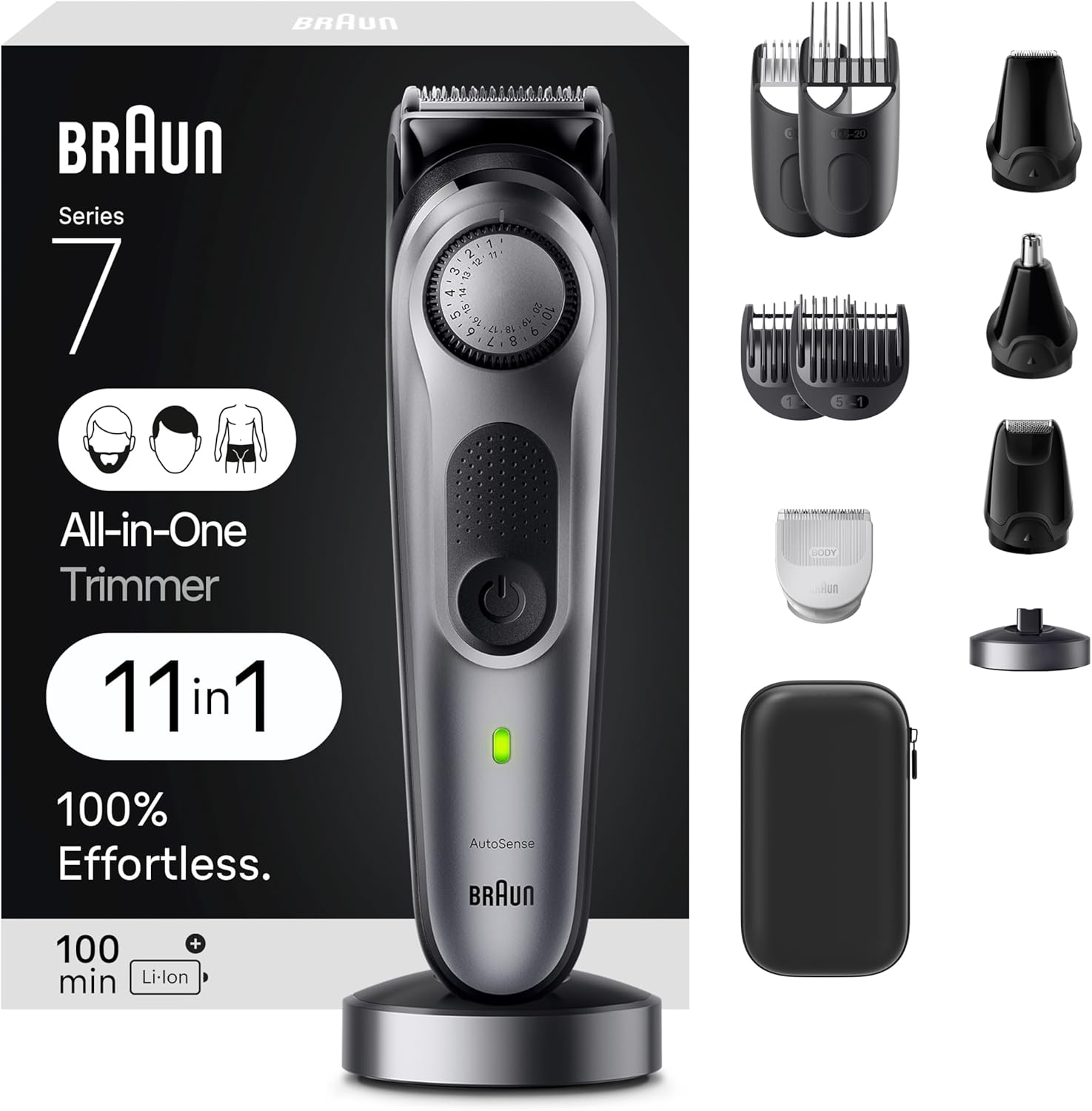
The Verdict: German engineering at its finest. The precision dial allows for 39 length settings in 0.5mm steps. If you are obsessive about your fade or stubble length, this gives you the most control.
Brio Beardscape V2
Best Ceramic Blade Beard Trimmer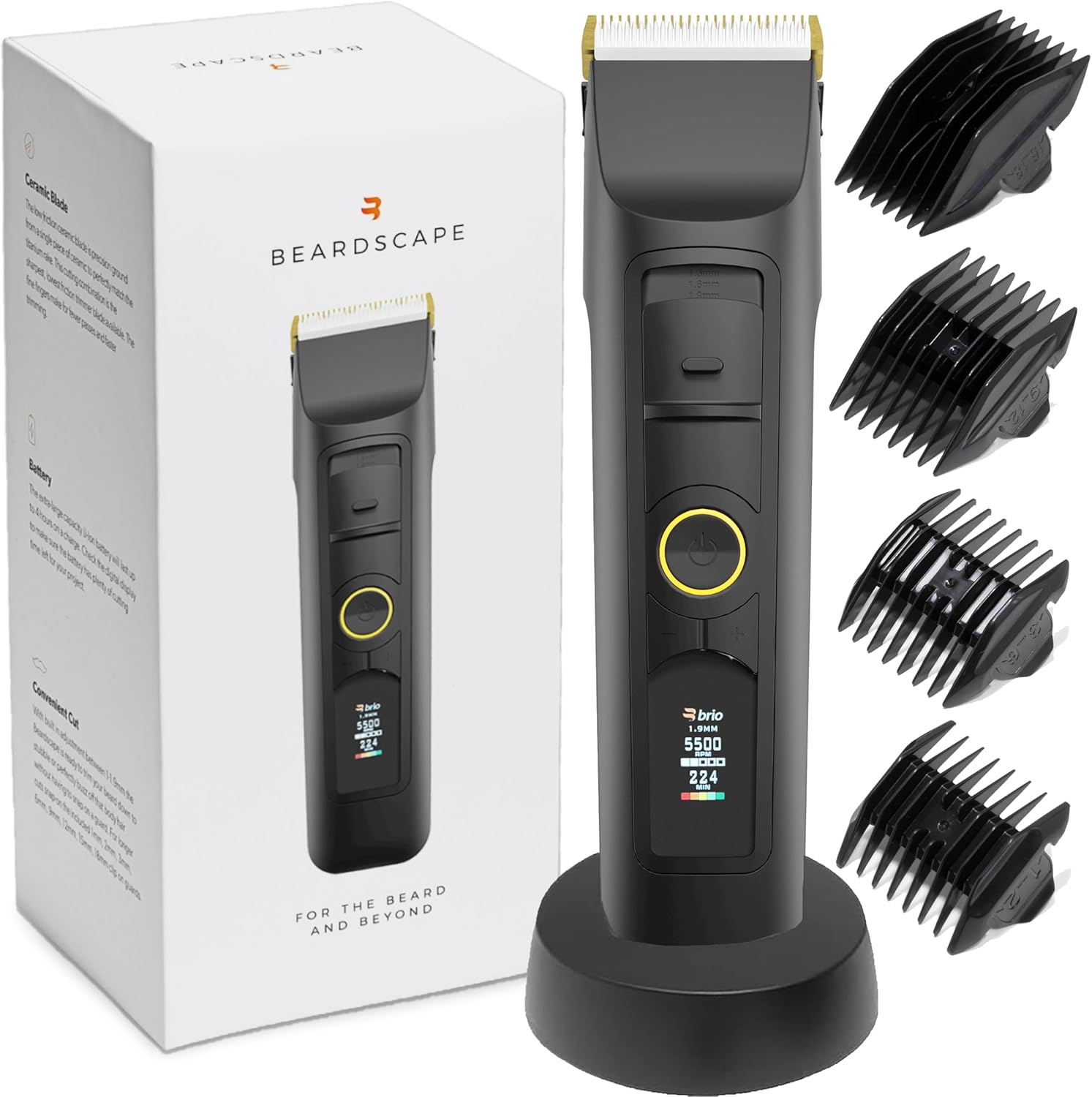
The Verdict: A cult favorite. It uses a ceramic blade which stays cooler than steel and stays sharper longer. It is much quieter than the Wahl or Philips, but the plastic body feels a bit cheaper.
The Competition: What We Rejected
We analyzed more than just the top 5. Here are other popular models and why they didn’t make the cut:
- Remington Vacuum Trimmers: Great concept, poor execution. The vacuum bin fills up in 30 seconds and loses suction, becoming a gimmick that’s hard to clean.
- Manscaped The Beard Hedger: Good marketing, but overpriced specs compared to the Philips Norelco 9000. You are paying for the brand, not superior performance.
- Generic Amazon Brands (Hatteker, Suprent): While cheap ($30), the batteries are often low-quality NiCd that die permanently within 6-8 months.
The Ultimate [2026] Buying Guide for Men’s Shaving Trimmers
Preface: The Evolution of Personal Grooming Tech
In 2026, the gap between “drugstore” electronics and **professional beard clippers** has narrowed significantly. Thanks to the trickle-down of Lithium-Ion battery technology from the EV and power tool industries, even consumer-grade **electric beard trimmers** now boast runtime and torque specs that would have been impossible a decade ago. However, manufacturers have become adept at using confusing jargon to disguise cost-cutting measures. This guide deconstructs the marketing to help you invest in a tool that will last for years, not months.
Chapter 1: Motor Mechanics – The Heart of the Machine
The motor dictates two critical factors: cutting speed (SPM – Strokes Per Minute) and torque (cutting force). Weak motors pull hair; strong motors slice it.
1.1. Rotary Motors (The Modern Standard)
Most **cordless beard trimmers** use DC Rotary motors. They offer a balance of power, size, and weight. High-end models (like the Wahl Stainless) use larger rotary motors with higher torque, allowing them to plow through dense facial hair without stalling. If a trimmer claims “Constant Speed Control” or “Auto-Sensing,” it means the chip increases voltage to the rotary motor when resistance is detected.
1.2. Pivot & Magnetic Motors
Historically found in corded barbershop clippers. They are powerful but heavy, loud, and vibrate significantly. In 2026, unless you are buying a specific vintage-style corded tool, you will rarely encounter these in consumer beard trimmers. Avoid them for home use due to the weight fatigue.
Chapter 2: Blade Metallurgy & Geometry
A motor is useless if the blade is dull. The material and manufacturing process of the blade determine longevity and comfort. This is critical for avoiding the need for a **mustache trimmer** separate from your main tool.
2.1. Stamped vs. Ground Blades
- Stamped Steel: The budget option. A sheet of metal is stamped into a comb shape. The edges are often rough and prone to tugging. Found in trimmers under $30.
- CNC Ground Steel: The premium option. Solid blocks of steel are precision-ground to a sharp edge. The teeth usually feature “Self-Sharpening” geometry, where the moving blade rubs against the static blade to hone the edge during use.
2.2. Material Science: Steel vs. Ceramic vs. Titanium
- Stainless Steel: The industry standard. Durable, rust-resistant (if high quality), and sharp. Can get hot during extended sessions due to friction.
- Ceramic (Zirconium Oxide): Found in niche brands like Brio. Harder than steel and stays cool because ceramic has low thermal conductivity. However, it is brittle; a drop on a tiled bathroom floor will shatter the teeth.
- Titanium Coated: Often a marketing gimmick. A thin gold-colored layer of titanium nitride is applied to steel. It looks cool and offers minor wear resistance, but rarely outperforms high-quality ground steel.
2.3. Zero-Gapping (Zero Gapped Clippers)
This refers to adjusting the blades so the tips align perfectly, allowing for a cut that is effectively skin-level (0mm). Only **professional beard trimmers** (like the Wahl or Andis) usually allow this. Warning: Zero-gapped blades are unforgiving and can easily nick loose neck skin if you aren’t careful.
Chapter 3: Battery Chemistry – The Planned Obsolescence Trap
The battery is usually the first component to fail. Knowing the chemistry helps you avoid buying “disposable” tech.
3.1. Lithium-Ion (Li-Ion)
The Gold Standard. Li-Ion batteries have high energy density (lighter weight, longer run time) and a flat discharge curve (the motor runs at 100% speed until the battery is empty). Crucially, they suffer from negligible “memory effect,” meaning you can charge them whenever you want without degrading capacity. This is a must for any **rechargeable beard trimmer**.
3.2. Nickel Metal Hydride (NiMH) / Nickel Cadmium (NiCd)
The Budget Trap. Found in **cheap beard trimmers** (often Panasonic or older Brauns). These batteries have a high self-discharge rate (they die while sitting in the drawer). They also require long charge times (8-12 hours) for short run times (40 mins). If a product box doesn’t explicitly say “Lithium-Ion,” assume it is NiMH.
Chapter 4: Waterproofing & Ingress Protection (IPX)
Understanding IPX ratings protects your investment.
- IPX7 (Fully Waterproof): Can be submerged in 1 meter of water. Safe for shower use and full rinsing under the tap. Note: **Waterproof beard trimmers** often cannot be used while plugged in (a safety feature to prevent electrocution).
- “Rinseable” (Head Only): The handle is not sealed, but the blade head can be detached or run under water. Do not take these in the shower. Moisture will eventually corrode the motor contacts.
- Dry Use Only: Rare in 2026, but usually found in high-end barber tools where oil lubrication is prioritized over washability.
Chapter 5: Comb Attachments & Precision
The guide comb is the interface between the blade and your face. Poorly designed combs ruin beard lines. You need a **beard trimmer with guards** that won’t flex.
5.1. Telescoping/Dial Guards vs. Snap-On Guards
- Dial Guards (Built-in): Convenient (you can’t lose the combs) and precise (0.5mm steps) – perfect for an **adjustable beard trimmer**. However, if the plastic mechanism breaks or clogs with hair, the entire trimmer becomes useless.
- Snap-On Guards (Fixed Length): Less convenient to store, but more durable. If a guard breaks, you buy a $5 replacement. They also tend to feed thick hair better than adjustable combs, which can clog.
5.2. Plastic Quality
Look for ABS or reinforced plastic combs. Cheap, brittle clear plastic combs (common on budget Remingtons) flex under pressure, leading to uneven cuts or accidental bald spots if you push too hard.
Chapter 6: Maintenance – The Oil Imperative
Every trimmer, even “maintenance-free” ones, performs better with oil. Friction creates heat; heat expands metal; expanded metal creates drag; drag kills battery life. Consider a **beard grooming kit** that includes oil.
The Protocol: Apply 2 drops of clipper oil to the teeth before every major trim. Turn the unit on for 5 seconds to distribute. Wipe off excess. This creates a hydrostatic barrier that prevents hair from sticking and reduces motor load by up to 30%.
Chapter 7: The “All-in-One” Fallacy
Marketing often pushes “18-in-1” grooming kits. Avoid them.
A jack-of-all-trades is a master of none. The blade width for a **nose hair trimmer**, a **beard styler**, and a **hair and beard trimmer** should be different. An “All-in-One” usually has a blade that is too narrow for efficient haircuts but too wide for detailing. Furthermore, the attachment heads are often potential failure points. Buy a dedicated **beard trimmer for men** and a separate cheap **nosehair trimmer**.
Chapter 8: Travel & Voltage
For the jet-setter, two features matter:
- Travel Lock: A button combination (usually holding power for 3s) that prevents the trimmer from turning on in your luggage. There is nothing worse than arriving to a dead trimmer and a buzzing suitcase.
- Dual Voltage (100-240V): Most modern trimmers handle this, but always check the charging brick. Some US-specific models are still 110V only and will fry if plugged into a European 220V outlet. USB-C charging is the holy grail here, allowing you to ditch the proprietary brick entirely. A **travel beard trimmer** must have this.
Conclusion: Making the Right Choice
In 2026, you generally get what you pay for, but diminishing returns hit hard above $100.
Under $40: You get NiMH batteries and stamped blades. Good for occasional use, but disposable.
$50 – $90: The sweet spot. Li-Ion batteries, ground steel blades, and decent waterproofing. (Philips 9000, Panasonic GB42).
$100+: You are paying for premium materials (steel bodies), branding, or niche features like ceramic blades. (Wahl Stainless, Brio).
For 95% of men, a dedicated Li-Ion trimmer with a simple adjustable dial is the most efficient, reliable path to a good beard.